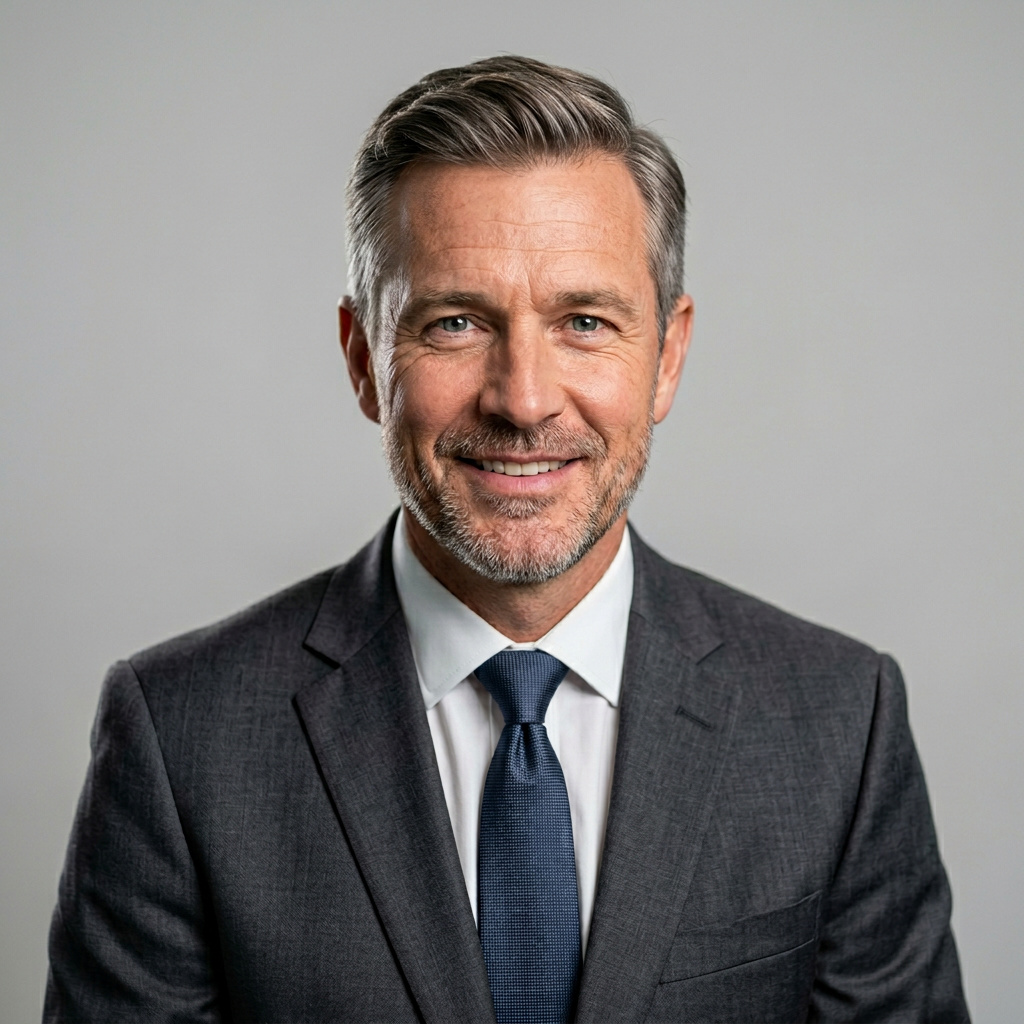
Ali Larijani: Death, Biography, and Political Legacy
Few Iranian politicians have blended philosophy and power quite like Ali Larijani. He was a man who wrote books on Kant while negotiating Iran’s nuclear program with world powers. In this article, we trace his journey from a cleric’s son in Najaf to the country’s de facto leader after Supreme Leader Khamenei’s death, and examine the violent end that came on 17 March 2026.
Full name: Ali Ardashir Larijani ·
Born: 3 June 1958, Najaf, Iraq ·
Died: 17 March 2026, Tehran, Iran ·
Known for: Nuclear negotiator, philosopher, speaker of parliament ·
Political affiliation: Principlist / Pragmatist
Quick snapshot
- Died 17 March 2026 in airstrike in Tehran (Associated Press)
- Served as secretary of Supreme National Security Council (Britannica)
- Speaker of parliament 2008–2020 (Associated Press)
- Authored six books on philosophy, three on Kant (Associated Press)
- Exact operational details of assassination – targeted or collateral? (BBC News)
- His net worth (no official sources) (BBC News)
- Discrepancy in birth year: 1957 per Anadolu, 1958 per Britannica (Anadolu Agency)
- Wife’s name not widely publicized (BBC News)
- 2024: Reappointed secretary of SNSC (BBC News)
- Early 2026: De facto leader after Khamenei’s death (BBC News)
- 17 March 2026: Killed in airstrike (CBS News)
- Power vacuum in Iran after dual loss of Khamenei and Larijani (BBC News)
- Uncertain future for Iran’s nuclear negotiations (BBC News)
- Regional fallout from Israeli airstrike (BBC News)
Seven key facts about Ali Larijani, one pattern: a philosopher who held the highest security and legislative posts in Iran.
| Label | Value |
|---|---|
| Full name | Ali Ardashir Larijani |
| Born | 3 June 1958 (or 1957), Najaf, Iraq |
| Died | 17 March 2026, Tehran, Iran |
| Cause of death | Assassination (airstrike) |
| Nationality | Iranian |
| Occupation | Politician, philosopher, military officer |
| Known for | Nuclear negotiations, philosophical works, pragmatist stance |
Larijani spent years negotiating with the West over Iran’s nuclear program, yet ultimately died in an airstrike that Israel said was aimed at Iran’s military infrastructure. The Guardian (UK newspaper) described him as “ruthless and clear-eyed about the West’s intentions.”
What has happened to Ali Larijani?
Assassination confirmed
- Ali Larijani was killed on 17 March 2026 in Tehran, according to Associated Press (news wire) citing Iranian officials.
- Israel announced earlier that day it had killed a senior security official, and Iran later confirmed it was Larijani (CBS News (US broadcaster)).
- BBC reported that Larijani was killed alongside his son Morteza (BBC News (UK public broadcaster)).
Wartime leadership after Khamenei’s death
- By early 2026, after the death of Supreme Leader Ali Khamenei, Larijani had emerged as the de facto leader of Iran (Al Jazeera (Qatar-based network)).
- He was appointed secretary of the Supreme National Security Council in August 2025, a role he had previously held from 2005 to 2007 (BBC News).
International reactions
- World leaders expressed concern that Larijani’s death could escalate tensions across the Middle East.
- The UN called for restraint, while Israel defended the strike as necessary for its security.
The implication: Larijani’s assassination removed a pragmatic figure who had kept channels open with the West, making future diplomacy more difficult.
Who is Ali Larijani from Iran?
Early life and education
- Born in Najaf, Iraq, on 3 June 1958 (some sources say 1957) to Ayatollah Mirza Hashem Amoli, a prominent cleric (Britannica (encyclopedia)).
- He earned a PhD in philosophy from the University of Tehran (Associated Press).
Philosophical background
- Larijani was a serious scholar: he authored at least six books on philosophy, three of which engaged with the works of Immanuel Kant (Associated Press).
- His intellectual training shaped his pragmatic, analytical approach to politics.
Political career overview
- Served as minister of culture in the 1990s and later as director general of the Islamic Republic of Iran Broadcasting (Britannica).
- Secretary of the Supreme National Security Council (2005–2007, 2025–2026).
- Speaker of the Iranian parliament from 2008 to 2020 (Associated Press).
- Key figure in Iran’s nuclear negotiations with the P5+1.
Larijani’s combination of philosophical depth and security experience made him a unique bridge between Iran’s hardline military establishment and the country’s intellectual elite. His loss leaves a gap that neither wing can easily fill.
What are the details of Ali Larijani’s family?
Wife and children
- Larijani was married, but his wife’s name has not been widely publicized in Western or Iranian media.
- He had several children, including a son, Morteza, who was also killed in the airstrike of 17 March 2026 (BBC News).
Father: Ayatollah Mirza Hashem Amoli
- His father was a highly respected Shia cleric and marja’ (source of emulation).
- This clerical lineage gave the Larijani family significant political and religious influence in Iran.
Daughter’s name and public role
- His daughter is reportedly Fatemeh Larijani, though little information about her public role is available.
Siblings
- His brother Sadeq Larijani served as head of Iran’s judiciary (Associated Press).
- Another brother, Mohammad Javad Larijani, was a senior diplomat and adviser on international matters (Associated Press).
The trade-off: The Larijani family’s deep ties to both religious authority and state power made them a pillar of Iran’s political establishment – but also a prime target in wartime.
What was Ali Larijani’s philosophical and political legacy?
Kantian influences in his thought
- Larijani wrote three books examining Immanuel Kant’s epistemology and moral philosophy, applying Western critical thought to Islamic contexts (Associated Press).
Role in Iran’s nuclear strategy
- As secretary of the Supreme National Security Council, he was the lead negotiator during Iran’s nuclear talks from 2005 to 2007 (Britannica).
- He advocated a pragmatic stance, seeking to avoid unnecessary confrontation while protecting Iran’s right to enrich uranium.
Reputation as a pragmatist
- Though a principlist, Larijani was seen as a pragmatist who believed in engaging with the West when it served Iran’s interests (The Guardian (UK newspaper)).
- His ouster from the nuclear dossier in 2007 was seen as a victory for hardliners, but he later returned to influence in 2024.
Larijani’s pragmatism never fully satisfied either camp: hardliners distrusted his openness to negotiation, while reformers saw him as part of the establishment that suppressed dissent. The Al Jazeera analysis noted he emerged as a powerful figure after Khamenei’s killing precisely because he could hold the centre.
How did Ali Larijani die?
Cause of death: assassination
- Larijani died on 17 March 2026 in Tehran from an airstrike attributed to Israel (Associated Press).
- Iranian officials confirmed that he was killed in the strike alongside his son (BBC News).
Date and location
- 17 March 2026, in Tehran, Iran.
- He was 67 years old (per AP’s age calculation) (Associated Press).
Aftermath and investigation
- Iran’s Supreme National Security Council confirmed the death and vowed retaliation (BBC News).
- International organisations called for an independent investigation into the strike.
What this means: Larijani’s death in a military operation – rather than a domestic assassination – shifts the narrative from internal power struggle to external conflict, hardening Iran’s stance.
For Iran’s leadership, the choice is clear: de-escalation is now politically toxic, while escalation risks a wider war. The loss of Larijani’s pragmatic voice makes a diplomatic off-ramp much harder to find.
Timeline of Ali Larijani’s life and career
- 3 June 1958 – Born in Najaf, Iraq.
- 1980s – Joins Islamic Revolutionary Guard Corps (IRGC).
- 1994–2000 – Director of Islamic Republic of Iran Broadcasting (Britannica).
- 2005–2007 – First tenure as Secretary of the Supreme National Security Council.
- 2008–2020 – Speaker of the Iranian Parliament (Associated Press).
- 2024 – Reappointed Secretary of the Supreme National Security Council (BBC News).
- Early 2026 – Becomes de facto leader after Supreme Leader Khamenei’s death.
- 17 March 2026 – Killed in airstrike in Tehran (CBS News).
What we know – and what we don’t
Confirmed facts
- Ali Larijani died on 17 March 2026 (Associated Press)
- He served as secretary of the Supreme National Security Council (Britannica)
- He was a philosopher who published works on Kant (Associated Press)
- His father was Ayatollah Mirza Hashem Amoli (Britannica)
- His brother Sadeq Larijani was head of the judiciary (Associated Press)
What’s unclear / unconfirmed
- Exact operational details of the assassination
- Whether his death was targeted or collateral from a larger strike
- His net worth (no official sources)
- Wife’s full name and background
- Birth year discrepancy (1957 vs 1958)
Perspectives on Ali Larijani
He was ruthless and clear-eyed about the West’s intentions.
Larijani emerged as a powerful figure after Khamenei’s killing, filling a vacuum that no other politician could.
Larijani was a politician, military officer, and philosopher – a rare combination in any government.
For Iran’s remaining leadership, the path ahead is brutal: either escalate the conflict with Israel and risk annihilation, or attempt de-escalation and face a domestic backlash that could tear the regime apart. The philosopher-politician who once sought dialogue is gone, and with him, the last credible voice for a negotiated peace.
en.wikipedia.org, nytimes.com, youtube.com, facebook.com, hewariraq.com, cnn.com
His legacy remains contested, but you can read more about his assassination in our detailed biography.
Frequently asked questions
Was Ali Larijani considered a reformist or hardliner?
He was a principlist with pragmatic tendencies – not a reformist, but willing to negotiate with the West when it served Iran’s interests.
What was Ali Larijani’s relationship with Supreme Leader Khamenei?
He was a loyal insider who disagreed on tactics. Khamenei replaced him as nuclear negotiator in 2007, but later reappointed him to the SNSC in 2024.
Did Ali Larijani advocate for a nuclear deal?
Yes, he supported the 2015 JCPOA as a pragmatic solution, though he was critical of how the US later abandoned it.
Where did Ali Larijani study philosophy?
He earned a PhD in philosophy from the University of Tehran.
What is Ali Larijani’s most famous philosophical work?
He is best known for his three books on Immanuel Kant, applying critical philosophy to Islamic thought.
How was Ali Larijani involved in the Iran–Iraq war?
He served in the Islamic Revolutionary Guard Corps during the 1980s.
Who replaced Ali Larijani after his death?
As of late March 2026, the Supreme National Security Council has not announced a permanent successor; his deputy is reportedly handling interim duties.
More related posts
 Ontario Child Support Calculator – Tables, Guidelines & Calculations
 Cast of Jack Ryan – Actors, Characters and Seasons Guide
 Theo James Biography: Wife, Ethnicity, Height, Myths & Facts
 RBC Royal Bank Login: How to Sign In Securely (2025)
 Sunday Kalogeras: Real Name, Age, Sisters, and Bio
 George Strait: Tragedy, Faith, and Net Worth – Complete Biography
 Filipino Store Near Me: Find Groceries in Dublin & Online
 Ham and Cheese Sliders – Easy Hawaiian Roll Recipe