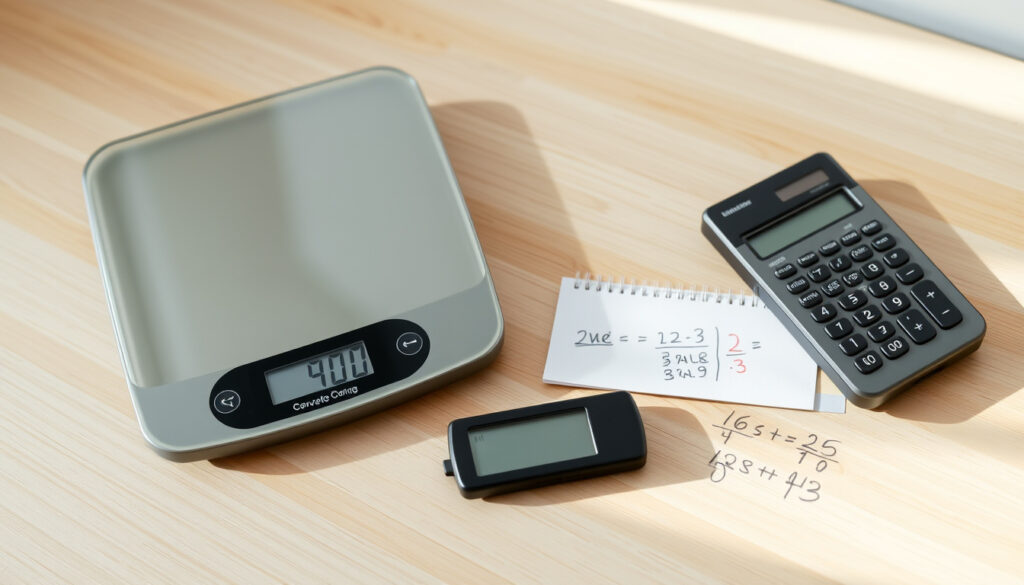
900 Grams to Pounds Conversion: Calculator & Formulas
Converting 900 grams to pounds yields 1.9841604 lb—roughly 2 pounds, or precisely 1 pound and 15.7 ounces. This conversion trips up plenty of home cooks, crafters, and anyone shipping packages internationally. This guide cuts through the confusion with exact formulas, multiple calculation methods, and benchmarks you’ll actually use in daily life.
900 grams: 1.98416 lb · 1 lb: 453.592 g · 1000g: 2.205 lb · 500g: 1.102 lb
Quick snapshot
- 900g = 1.9841604 lb (Convert.net)
- 900g = 1 lb 15.7 oz (CalculateMe)
- 900g = 31.75 oz (Grams to Pounds Converter)
- Rounding preferences vary by source (some use 1.984 lb, others 1.9842 lb depending on decimal places)
- Precision needed for specific applications (cooking vs. shipping) is not standardized
- The metric system’s gram definition dates to 1795, but standardized conversion factors evolved over centuries (RapidTables)
- Online conversion calculators became widely available in the 2000s (RapidTables)
- Most countries use metric officially, but imperial persists in the US, Liberia, and Myanmar
- Digital kitchen scales increasingly show both units simultaneously
The following table consolidates key conversion values sourced from authoritative conversion calculators. These figures form the foundation for all calculations in this guide.
| Conversion | Value | Source |
|---|---|---|
| 900 grams in pounds | 1.98416 lb | Convert.net |
| 900 grams in ounces | 31.747 oz | Grams to Pounds Converter |
| Grams per pound | 453.592 g | The Calculator Site |
| Pounds per kg | 2.20462 lb | RapidTables |
| Ounces per pound | 16 oz | The Calculator Site |
| 900 grams in kilograms | 0.9 kg | Grams to Pounds Converter |
“1 gram (g) is equal to 0.00220462262185 pounds (lbs)” — RapidTables, conversion reference authority
How much is 900 grams in weight?
The short answer: 900 grams equals 1.9841604 pounds. That’s just under 2 pounds, or more precisely, 1 pound and 15.7 ounces. If you’re working in the kitchen or need to enter a weight on a form that uses imperial units, you’ll typically round this to 1.98 lb or 1 lb 15.7 oz depending on how much precision the situation demands.
Exact pounds conversion
Two methods exist for converting grams to pounds. The first uses division: divide your gram value by 453.592 to get pounds. The second uses multiplication: multiply your grams by 0.00220462262185 to arrive at the same result RapidTables. For 900 grams specifically, 900 ÷ 453.592 = 1.9841604 lb, while 900 × 0.00220462262185 also yields 1.9841604 lb.
The exact divisor can be 453.592 or the more precise 453.59237 depending on the source RapidTables. For everyday cooking, using 453.592 is perfectly adequate. For pharmaceutical or shipping applications where tiny differences add up, the extra decimal places matter.
Pounds and ounces breakdown
To express 900 grams as pounds and ounces, first find the whole pounds (1), then convert the remainder (0.9841604 lb) to ounces by multiplying by 16. That gives you 15.7 ounces CalculateMe. The complete answer: 900g = 1 lb 15.7 oz.
The implication: if you’re weighing ingredients on a kitchen scale that only shows ounces, you’d dial in approximately 15.7 oz. On a scale that displays pounds, 1.98 lb (or 1 lb 15.7 oz) makes the most sense.
How many ounces is 900 grams?
Nine hundred grams converts to 31.747 ounces. Since there are 16 ounces in every pound, you can verify this by taking the 1.9841604 lb figure and multiplying by 16: 1.9841604 × 16 = 31.7466 oz, which rounds to 31.75 oz Grams to Pounds Converter.
Ounces calculation
The direct calculation skips pounds entirely: 900g × 0.035274 = 31.7466 oz. This works because 1 gram equals 0.035274 ounces The Calculator Site. For quick mental math, picture 1 ounce as roughly 28 grams—900 divided by 28 gives you a ballpark of 32 ounces, which is close enough to check your work.
Relation to pounds
The connection is straightforward: divide your ounces by 16 to get pounds, or multiply pounds by 16 to get ounces. So 31.75 oz ÷ 16 = 1.98 lb. These two units simply express the same weight at different scales The Calculator Site.
The pattern: imperial weights split everything into 16-ounce pounds because the system historically used 16 drams per ounce. Modern cooking and shipping still use this structure, which is why you’ll see recipes listing both pounds and ounces separately.
“To convert a measurement in grams to a measurement in pounds, multiply the weight by the following conversion ratio: 0.002205 pounds/gram” — Inch Calculator, conversion tool provider
How many grams makes 1 lb?
One pound contains exactly 453.592 grams. This is the divisor used in the division method for converting any gram value to pounds. Working backward confirms the relationship: 453.592 × 2.205 = 999.97, which is essentially 1000 grams The Calculator Site.
Reverse conversion
Going the other direction—converting pounds to grams—uses multiplication instead. Take your pound value and multiply by 453.592. So 1 lb × 453.592 = 453.592 g, and 2 lb × 453.592 = 907.184 g. This is exactly what the conversion factor in Excel or spreadsheet formulas does automatically.
For US home bakers importing European recipes, memorizing the 453.592 factor means you never need to second-guess a conversion again. Plug it into any spreadsheet, and your gram values become pounds instantly.
Standard factor
The standard conversion ratio is 0.00220462262185 pounds per gram, or equivalently 453.59237 grams per pound. Most online calculators and kitchen references round this to 0.002205 lb/g or 453.592 g/lb for practical use Inch Calculator. The difference between 453.592 and 453.59237 is negligible for most applications.
The catch: rounding to fewer decimal places introduces tiny discrepancies. A nutrition label rounding to the nearest gram might show 454g instead of 453.592g per pound. Over multiple conversions or large batches, these rounding differences compound.
Is 500g the same as 1 lb?
No, 500 grams falls short of 1 pound by about 46.4 grams. Specifically, 500g = 1.102311 lb, which is 0.102311 pounds over the halfway mark to 1 lb. That’s roughly 1 pound and 1.64 ounces Inch Calculator. So if a recipe calls for 1 lb of butter and you substitute 500g, you’ll have slightly more than needed.
500g vs 1 lb
The gap between 500g and 1 lb is about 3.3%. For imprecise tasks like filling a bag or estimating package weight, 500g is close enough to 1 lb for government work. But in baking, where ratios matter, that 3.3% difference can throw off a recipe’s balance. A baker substituting 500g flour for 1 lb might end up with a dough that’s slightly dry.
For home cooks eyeballing quantities, 500g and 1 lb are close enough. For precise recipe scaling, use a scale that displays both units rather than assuming equivalence.
Other benchmarks
Common conversion benchmarks worth memorizing: 1000g = 2.205 lb (just over 2 pounds), 800g = 1.764 lb (about 1 lb 12 oz), and 700g = 1.543 lb (roughly 1 lb 9 oz) The Calculator Site. For reference, a stick of butter in the US weighs about 113g or ¼ pound—so 900g is roughly 8 sticks of butter.
What this means: if you’re following a European recipe that lists 900g of dough ingredients, that’s almost exactly 2 US sticks × 4 = 8 sticks worth. US bakers can visualize this as 2 full sticks short of 2 pounds total.
Is 900g equal to 1kg?
No, 900g is 100 grams short of 1 kilogram. Since 1kg equals 1000g exactly, 900g is 0.9 kilograms—leaving a 10% gap Grams to Pounds Converter. Converting to pounds clarifies the gap: 1 kg = 2.20462 lb while 900g = 1.98416 lb, so 1kg is about 0.22 pounds heavier.
900g to kg
The conversion requires only a decimal shift: 900g ÷ 1000 = 0.9 kg. No multiplication or division by 453.592 required since the metric system scales cleanly. If your digital scale shows only kilograms, 0.9 kg is the direct answer.
Kg vs lb
The gap becomes clearer when comparing common weights: a 1kg bag of flour weighs 2.2 lb, while 900g of flour weighs just under 2 lb. For US bakers accustomed to 5-pound bags of flour, that’s roughly 2.27kg—so a standard US bag is more than double the 900g European package RapidTables.
The pattern: metric weights under 1kg are common for bread flour, specialty ingredients, and packaged goods sold internationally. Imperial users should mentally add about 10% to any 900g weight to approximate the 1kg equivalent.
Comparison: Division vs. Multiplication Methods
Three conversion approaches exist for turning grams into pounds, each producing identical results when applied correctly. The table below compares the methods side by side so you can choose whichever feels more intuitive.
| Method | Formula | Example (900g) | Result |
|---|---|---|---|
| Division | grams ÷ 453.592 | 900 ÷ 453.592 | 1.98416 lb |
| Multiplication (rounded) | grams × 0.002205 | 900 × 0.002205 | 1.9845 lb |
| Multiplication (precise) | grams × 0.00220462262185 | 900 × 0.00220462262185 | 1.98416 lb |
The difference between methods is purely cosmetic. Division by 453.592 and multiplication by 0.002205 produce results accurate to about 5 decimal places for values under 10 kilograms. For most home kitchen scenarios, either approach works fine.
How to convert 900 grams to pounds (step-by-step)
Working through the conversion manually builds understanding of what the calculator is actually doing.
Identify your starting value: 900 grams.
Choose your method: division (÷ 453.592) or multiplication (× 0.00220462262185).
Calculate: 900 ÷ 453.592 = 1.9841604 lb.
Round to desired precision: 1.98 lb for casual use, 1.984 lb for precise applications, 1.98416 lb when accuracy matters.
Optional—convert decimal to ounces: 0.98416 lb × 16 = 15.7 oz. Final answer: 1 lb 15.7 oz.
For spreadsheet users, the formula in Excel is: =A1/453.592 where A1 contains your gram value. Google Sheets uses the same syntax. Microsoft provides specific guidance for converting grams to pounds and ounces simultaneously Microsoft Learn.
Batch conversion table: common gram values
Six common weights, each with pound and ounce equivalents for quick reference.
| Grams | Pounds | Pounds + Ounces |
|---|---|---|
| 500g | 1.102 lb | 1 lb 1.64 oz |
| 600g | 1.323 lb | 1 lb 5.16 oz |
| 700g | 1.543 lb | 1 lb 8.69 oz |
| 800g | 1.764 lb | 1 lb 12.22 oz |
| 900g | 1.984 lb | 1 lb 15.75 oz |
| 1000g | 2.205 lb | 2 lb 3.27 oz |
For US buyers sourcing ingredients internationally, bookmark this table. A 1kg bag of flour is just over 2 pounds, while 900g falls just under—useful context when comparing prices or portion sizes.
If you’re scaling recipes, work in grams when possible and convert once at the end. Mid-recipe conversions invite rounding errors that compound across multiple batches.
Related reading: 17 cm in Inches · Twin Size Bed Dimensions
Benchmarks like 500g to 1.102 lb build on the precise standard where 1 pound in grams charts reveal exactly 453.59 grams per pound for reliable scaling.
Frequently asked questions
How do you convert 900 grams to pounds?
Divide 900 by 453.592 to get 1.98416 pounds. Alternatively, multiply 900 by 0.00220462262185 for the same result. Both methods are equally accurate.
What is 1000 grams in pounds?
1000 grams equals 2.205 pounds, or 2 pounds 3.27 ounces The Calculator Site. This is a useful benchmark since 1kg is exactly 1000g.
How many pounds is 800 grams?
800 grams equals 1.764 pounds, or approximately 1 pound 12.22 ounces The Calculator Site.
Is 1 kg more than 2 pounds?
Yes, 1 kilogram equals 2.20462 pounds, which is slightly more than 2 pounds. The difference is about 3.3 ounces—roughly a large chocolate bar’s worth RapidTables.
What is the formula for grams to pounds?
Pounds = Grams ÷ 453.592, or Pounds = Grams × 0.00220462262185. For a quick mental estimate, multiply grams by 0.0022 Inch Calculator.
How many ounces in a pound?
There are exactly 16 ounces in 1 pound, by definition of the avoirdupois system used in the US The Calculator Site.
900 grams to pounds for flour—does it change?
No—the conversion formula is purely mathematical and applies equally to all substances. A gram is a gram regardless of material. However, volume-to-weight ratios differ dramatically: 900g of flour is roughly 7¼ cups, while 900g of water is about 3.8 cups because flour is less dense CalculateMe.
Pounds to grams quick calculation?
To convert pounds to grams, multiply by 453.592. So 2 pounds = 907.184g, and 1.984 pounds (the 900g equivalent) = 900g exactly. The relationship is perfectly reciprocal DollarTimes.
For US home cooks importing European recipes, the choice is straightforward: invest $15–$25 in a digital kitchen scale that displays both grams and pounds. You’ll eliminate conversion guesswork, reduce food waste from over-measuring, and finally achieve those bakery-quality croissants that require precise flour weights.
More related posts
 Shah of Iran: Biography, Reign, and Overthrow
 Easy On Me Lyrics – Full Breakdown and Song Meaning
 Taylor Swift Life of a Showgirl: Release, Tracklist, Review
 Jeremy Lin: NBA Career, Championship & Where He Is Now
 Jamal Murray: Ethnicity, Girlfriend, Net Worth, Injury Comeback
 Bonnie and Clyde: True Story, Love, Crimes & Legacy
 Yukon Striker guide: height, speed, drop angle & records
 Save on Foods Regina: Store Locations, Services & Tips